

A Few Notes from A Weekend at the Tactical Defense Institute (TDI)
Country Attic Treasure’s Kevin Ready was recently able to attend a three day Tactical Rifle class at the Tactical Defense Institute in Adam’s County, here he shares a few notes from a weekend of shooting.
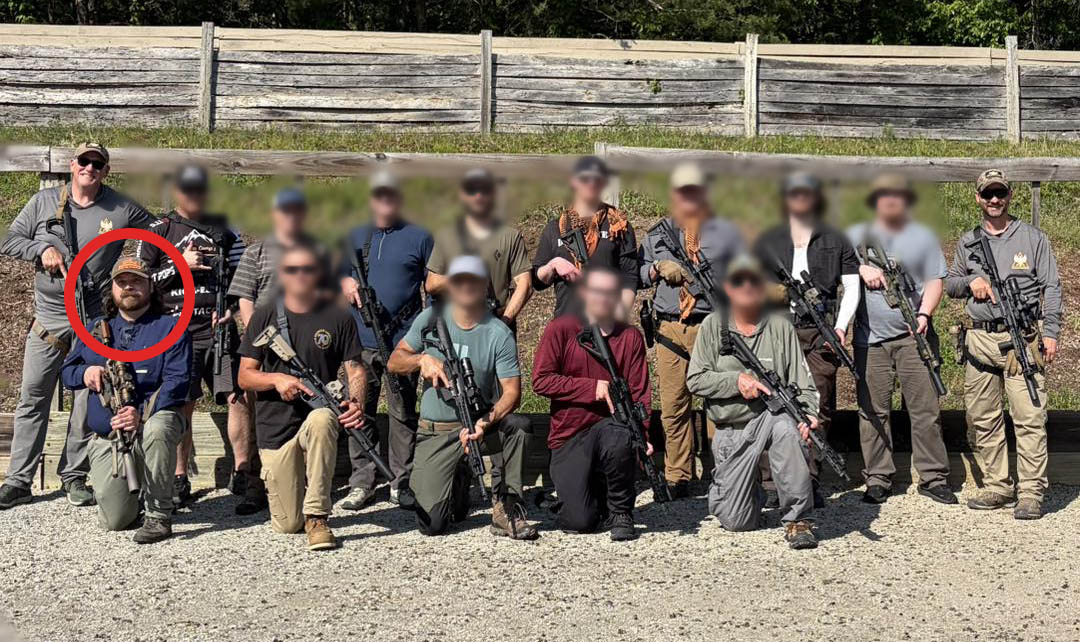
One student asked for privacy but I don’t know who it was, so I just blurred everyone else’s faces.
Before I dive into it, here is a list of the equipment so you know what I am talking about:
Rifle – Sig Sauer MCX Spear LT (5.56, 11.5″ SBR)
Optic – Leupold MARK5 HD 2-10×30 with Leupold Delta Point Pro piggyback red dot
Suppressor – B&T XH-556 Ti
Accessories – Onyx Arms “Stubby” Foregrip, Magpul Bipod, Surefire Scout Pro
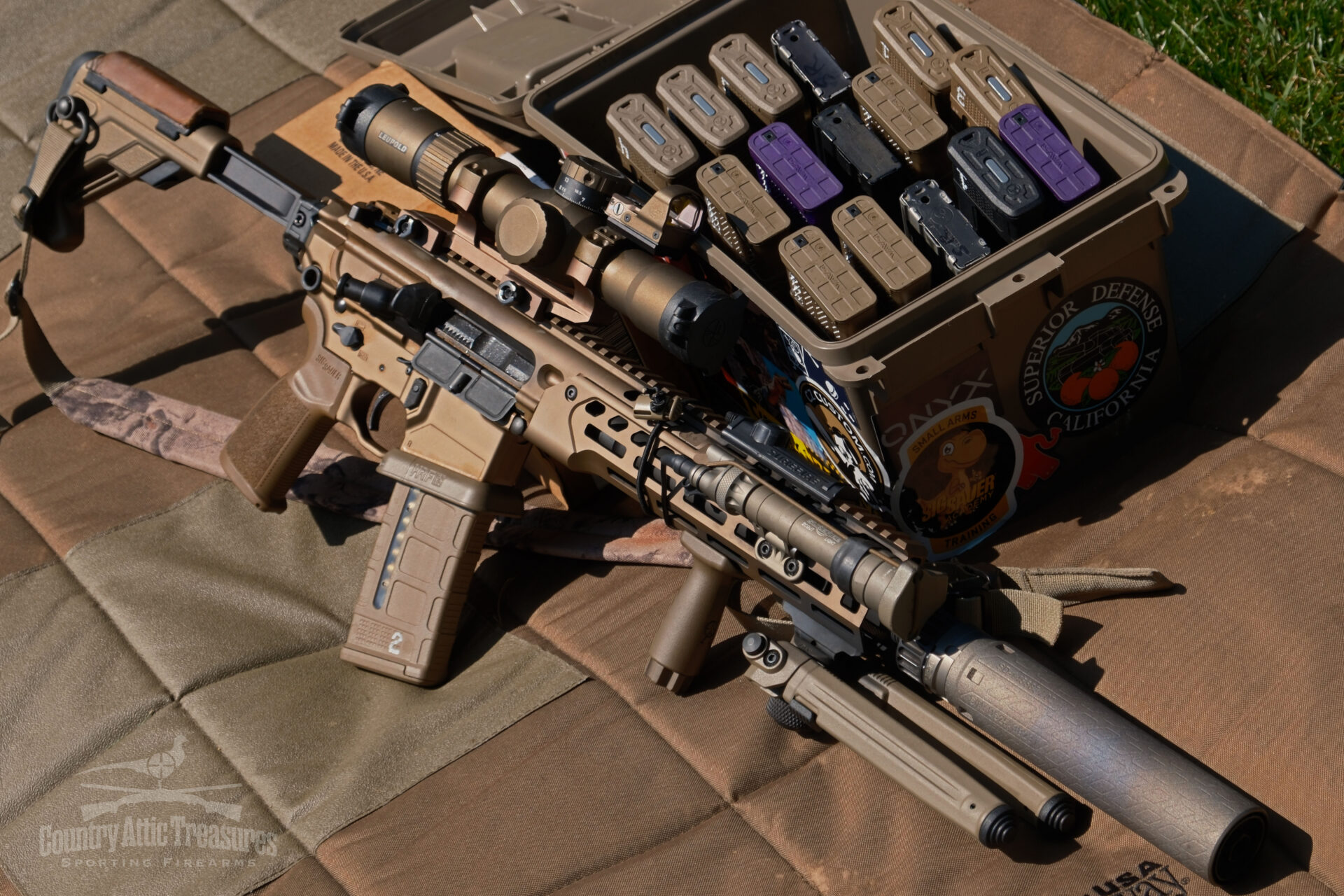
First, I have to heap praise at the 11.5” Sig Sauer MCX Spear LT in 5.56 that I have owned for several years, but have never been able to push it quite this hard. I intentionally went into class with about 2,000 rounds of recent suppressed shooting and no cleaning, deliberately bringing a filthy rifle to see how it did. No surprise, it did great, the only malfunction I encountered was during a “tap-rack” reload drill, and it was caused by a fresh magazine that was overloaded with one too many rounds.
With a premium price ($2,599.00) many people think that the rifle should be extremely accurate, but that price has much more to do with the rifle being built to be used very hard and still run at a high level. With that said, I was still seeing 2MOA groupings at 200 yards using inexpensive Hornady Frontier 55 grain, which is impressive from an 11.5” suppressed piston rifle.
One of the other most overlooked aspects of the new MCX’s (and now many other new rifles) is the ambidextrous controls, primarily the slide release. Ambidextrous mag releases are incredible, and once you get used to them, you will never want to run a gun that doesn’t have them.
The Magpul BAD-lever is a great solution for those who don’t have an ambidextrous magazine release, but those do take up space inside of the trigger guard, and it is easy to activate it, and then press the trigger unintentionally. Rifles like the Sig MCX and the HK MR556A4 are great examples of rifles with factory built, ambidextrous, magazine, releases, that are well away from the trigger guard, but still very easy to operate with your dominant hand in a comfortable position. It helps massively with quicker reloads and clearing malfunctions.

The MCX is heavier than the average Direct Impingement rifle. My rifle, with a Leupold Mark5HD 2-10, Delta Point Pro red dot, a B&T XH-556 suppressor, and a Magpul bipod weighs in a 11lbs and 7oz. Weight is a personal consideration, I can handle it and find the benefits (super soft recoil, adjustable gas block, folding stock, etc) to outweigh the negatives (weight, cost).
Many other classmates had rifles in the 7lb or 8lb realm, with some even as low as 6lbs. My first time I did this class I was younger, with a 10lb rifle and it was too much for my by the end of the third day after close to 24 hours of range time. This time, knowing I had a heavier rifle, I just made sure to work out my arms and upper body more in advance and it was no problem at all.
The Leupold Mark 5HD 2-10 is an incredible optic, most of my shooting beyond 50 yards was done with the scope. The price is considerable, but it is one of the lightest scopes in its market, with unbeatable glass clarity, and an exceptional track record for reliability. Not to mention the custom dial system, which I has dialed in for the Hornady Frontier 55 Grain that I was shooting, so all I had to do was dial the yardage on my elevation turret.

For closer drills and house clearing exercises, the Delta Point Pro mounted on top of the scope was dialed in for only 15 yards and allowed me to be very quick and accurate in a variety of timed drills. Coming from an offset red dot setup, it took some time to get used to lifting my head for the red dot rather than canting the rifle, but it’s a better solution at the end of the day in my opinion.
All of this is held together but Leupold IMS 35MM mount with a Leupold “bridge” for the Delta Point Pro, an expensive but excellently machined and super heavy duty single piece mount that is used by the military for an M110 contract with the same Leupold Mark 5HD in a larger magnification range.
Despite the massive loss of TDI‘s founder, John Benner, the program is just as excellent as it has ever been. We can’t encourage our customers enough to look towards TDI for training on almost any weapon system you can think of.
Without giving away too many of their lessons, teachings, or methods, I will say that TDI remains an incredible facility that is less than two hours from the store, and it’s the some of the same training that the professionals receive. Whether it is the West Point rifle team or local SWAT departments, TDI trains some of the best and has a great reputation for a reason.
Scott and I will be attending their two day Pistol Caliber Carbine Class at the end of July if anyone wants to come shoot with us, and I plan on continuing my rifle education with TDI at the Tac Rifle II class in October.
Additional notes and lessons learned, in no particular order.
- Adding or subtracting a thermal cover from your suppressor can move your point of impact up to an inch and a half at 100 yards, I experienced this in real time.
- A clean gun runs well. A dirty but lubricated gun runs well. A dirty and dry gun does not run well.
- Red are not affected by heat miraging nearly as much as LPVO’s
- The quality of your kit will affect your overall experience. A good dump pouch is essential, and don’t wear OWB holsters and mag carriers on a regular belt unless you want them to rub and eventually bruise you.
- I was one round outside of the a zone from completing a full sweep of their “standards “test. A little more dry fire, a little more practice at home, and a little more familiarization with my new optic setup; and I would have been the third of 20 people to leave with a TDI Poker chip signifying that I had done a clean sweep of the exercise.